
Water Damage After Firefighting in Jeffersonville, IN
Water damage after firefighting in Jeffersonville, IN: extraction and structural drying proven by daily readings.
- Extraction First
- Drying Proven by Readings
- Mold Window Watched
- Available 24/7
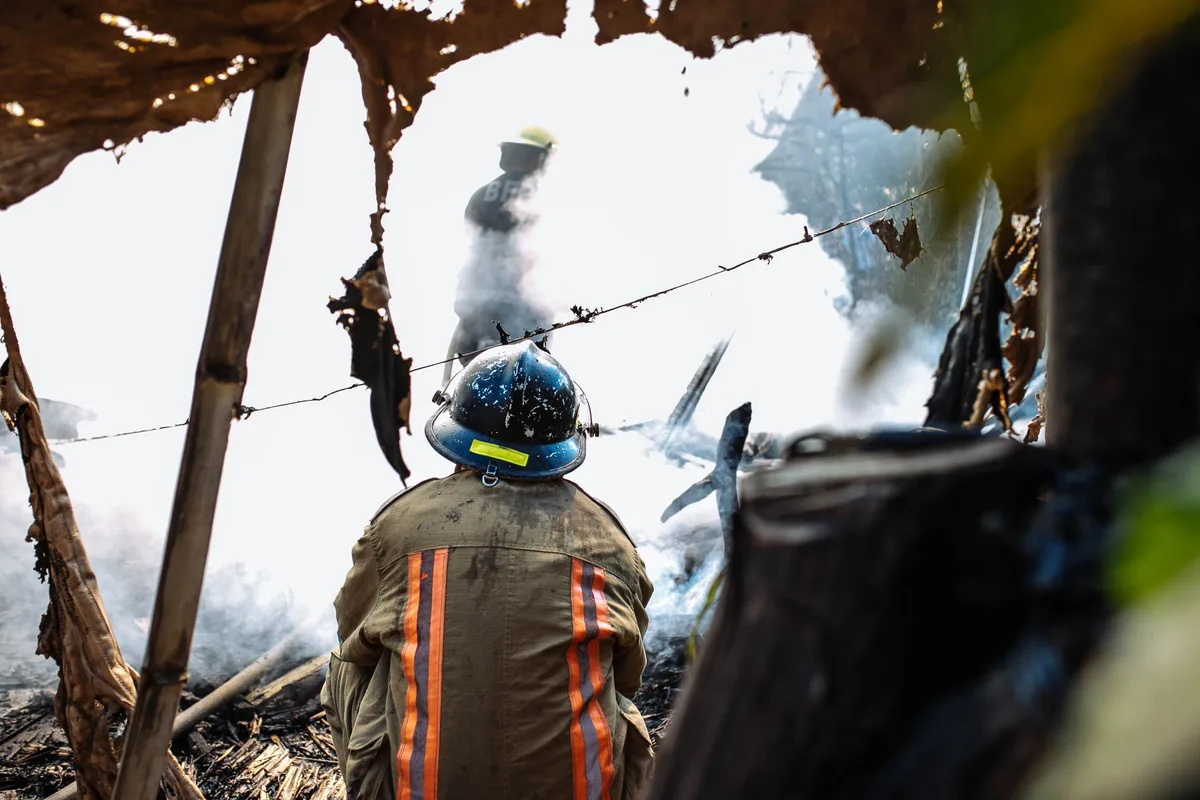
The water that saves a house can quietly ruin it afterwards. Firefighting puts hundreds of gallons into a structure in minutes, and sprinkler systems add their own; that water runs down wall cavities, under floors and into the basement, and it does not dry on a schedule anyone can see from the surface. This service is the second half of every fire job: the water out, and the structure proven dry.
The standard is readings, not dates. Moisture meters map how far the water travelled, equipment is set from the map, and daily readings steer the drying until every point reaches its dry standard. That proof matters twice: it is what keeps mold out of walls that look dry, and it is the record an insurer reads to see the water was handled properly.
Jeffersonville's housing stock runs from the brick blocks downtown and the Rose Hill hillside to the Spring Street corridors, the Charlestown Pike and Utica Pike roads and the newer subdivisions off Veterans Parkway, and water damage cleanup after firefighting in Jeffersonville has to fit the house it lands in. The professional who takes your call works these streets and reads the house as it actually is: plaster or drywall, hardwood or laminate, a basement, a crawl space or a slab, and contents that range from replaceable to irreplaceable.
Signs Firefighting Water Went Further
- Baseboards swelling or paint bubbling on walls below the fire floor
- Floors that feel soft, cupped or springy days after the fire
- A musty smell building in rooms that never burned
- Water staining spreading on ceilings below the fire
- A basement or crawl space still damp a week later
How the Drying Runs
The professional maps the water with meters, scopes the extraction and drying in writing, and runs equipment against a daily moisture log. The job closes on readings at the dry standard, not on a date, and the log is yours for the record.
- Map the water. Meters trace it through walls, floors and framing.
- Extract. Standing and trapped water removed, including under floors.
- Open where needed. Only the materials that cannot dry in place come out.
- Dry against readings. Dehumidifiers and air movers adjusted daily against the log.
- Prove and close. Final readings at the dry standard, signed off in writing.
The visit for water damage cleanup after firefighting in Jeffersonville starts with the evidence: where the fire burned, how the smoke travelled, what the water reached, read from the burn patterns, the soot and the materials themselves. Anything hidden that could change the job, soot inside a wall cavity, water under a floor, a flue or duct run carrying residue through the house, is flagged there, before a price exists.
You then get a written scope for water damage cleanup after firefighting in Jeffersonville: the rooms affected, the securing, cleaning and drying plan, the materials that must come out and the price, set out line by line. Work starts only when you approve that scope, and the professional you spoke to on the phone is the professional who runs the job.
What This Cleanup Costs in Jeffersonville
The price follows the water: how much entered, how far it travelled, and how long it stood before extraction. Water caught the same day is the modest end; water that sat in cavities for a week, with tear-out and mold prevention added, costs more. The written scope separates extraction, drying and tear-out, and the daily log shows exactly what the drying days bought.
Keeping Water Damage From Compounding
Speed is the whole game: extraction inside the first day keeps the tear-out list short and closes the mold window. Until then, no household fans blowing into wall cavities and no heaters baking wet rooms; both push moisture deeper and spread what the water carried. The drying system is set by readings, and it works best undisturbed.
Water Damage After Firefighting Questions
How long does structural drying take?
Usually three to five days of monitored equipment for typical firefighting water, longer where water sat or dense materials are involved. The daily readings show the structure releasing water, and the job ends when the readings reach the dry standard, not when a calendar says so.
Will walls have to be opened?
Only where water is trapped where it cannot dry: soaked insulation inside a cavity is the usual case. Hardwood, tile and concrete often dry in place. The meter map decides, material by material, and the scope names what opens and why before it happens.
Can mold really grow that fast?
On wet, warm organic material, mold can establish within one to two days, which is why the extraction clock matters. Drying to a proven standard, with antimicrobial treatment where the scope calls for it, is what closes that window.
After a Fire, the Clock Is Not Neutral.
Call +1 (844) 468-2611 and the call goes straight to a Jeffersonville restoration professional who can secure the property, scope the work in writing and start the restoration properly.
Call +1 (844) 468-2611Available 24/7 · No forms, no call centre · The call goes directly to the professional
Big Four Fire Pros is an introduction service for water damage cleanup after firefighting in Jeffersonville. One call reaches a local restoration professional directly; the inspection, written scope and restoration are that professional's work. For the safety side of any house fire, the federal home fire safety guidance at Ready.gov sets out what to do before, during and after the fire.